
'...you evaluate three key factors before committing your money.'
Markets regulator Sebi on Thursday came out with detailed modalities for implementation of the accredited investors framework, a move expected to open up a new channel of raising funds from sophisticated investors. The regulator has issued guidelines on eligibility criteria for accredited investors (AIs), procedure as well as validation for accreditation, procedure to avail benefits linked to accreditation and flexibility to investors to withdraw "consent", according to a circular. Sebi had earlier this month introduced the concept of "accredited investors" in the Indian securities market.

'The voice which came wherever I travelled was that we are proud taxpayers. We are honest taxpayers. We want to continue to serve the country by being good taxpayers.' 'But what do you think about the kind of things you can do for us?'

Finance Minister Nirmala Sitharaman on Tuesday said the securities transaction tax (STT) will be increased on futures and options (F&O) trade from October 1 to discourage retail investors from investing in the risky instrument.

Markets under pressure; IT financials grab spotlight.

Few finance ministers announce any taxation measure that could upset the stock market. Ms Sitharaman decided to take that risk, observes A K Bhattacharya.

From bhikshus of Ashokan 3rd century BC and medieval Sufis to Oxfam, Omidyar and Soros now, non-State actors have any real power only when they work in conjunction with a real State, asserts Shekhar Gupta.

A total of Rs 52,759 crore has been raised by 61 companies through initial public offers till October this fiscal, higher than the funds mopped up through this route in the last financial year, the government told the Lok Sabha on Monday. Out of the 61 companies that hit the markets till October of the current fiscal, 34 entities were Small and Medium Enterprises (SMEs). Finance Minister Nirmala Sitharaman said that a large number of manufacturing and service sector companies are coming up for listing.

We have millions of newbie investors who are clueless about how to handle sudden and severe adverse market reactions, which arrive from time to time, observes Debashis Basu.

The Securities and Exchange Board of India (Sebi) has proposed that at least 10 per cent of corporate bond market trades by foreign portfolio investors (FPIs) should be done on the request for quote (RFQ) platform. At present, most trades in the corporate bond market are over-the-counter (OTC), creating a lot of opacity. The markets regulator has been nudging debt market participants such as mutual funds (MFs), alternative investment funds (AIFs) and brokers to use the RFQ platform to boost secondary market liquidity and transparency.

ASE Capital Markets, a subsidiary of The Ahmedabad Stock Exchange, the second oldest bourse in India, is selling a part of its holding in the Bombay Stock Exchange -- the second time in less than 12 months.
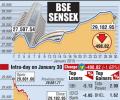
Nifty snaps 10-day winning streak

Titan Company on November 21, became the second Tata group firm to join Rs 3 trillion market capitalisation (market cap) club after its shares hit a new high of Rs 3,400, up nearly 2 per cent on the BSE in Tuesday's intra-day trade. At 12:28 PM; with a market cap of Rs 301,847 crore (Rs 3.02 trillion) Titan stood at number 16th position in overall market cap ranking on the BSE listed companies, the exchange data shows. Titan overtook paint company Asian Paints, which has a market cap of Rs 300,579 crore, data shows.

Ambani and Adani account for a fifth of the net worth of all billionaire promoters in the country and half the combined net worth of the top 10.

The number of mergers and acquisitions (M&As) in August that involved private equity (PE) funds was the lowest in nearly three years. There were 26 such deals last month, according to data from tracker Refinitiv (part of London Stock Exchange Group). The last time monthly deal numbers were so low in recent times was January 2021 when Covid cases were picking up during the second wave of the pandemic.
Sebi on Tuesday restrained two Brightcom Group officials, M Suresh Kumar Reddy and Narayan Raju, from holding any managerial position in the company or its subsidiaries until further orders. Reddy is the promoter-cum-chairman and MD of Brightcom Group Ltd (BGL) while Raju is the chief financial officer. Besides, the regulator also banned Reddy from the securities market until further orders.

Tata Sons Private Limited, the holding company of the Tata group, witnessed a precipitous drop in its net debt to Rs 5,656 crore in the 10 months ended January this year, as its cash reserves burgeoned to Rs 9,516 crore during this period. Eight years ago, in 2015-16, Tata Sons reported a net debt of Rs 5,132 crore; from March 2017 until March 2023, this figure was above the Rs 14,700 mark, peaking at Rs 27,437 crore at the end of March 2019, according to data sourced from Capitaline. The company's gross debt nearly halved to Rs 15,173 crore until January 2024 on a standalone basis, down from a peak of Rs 31,363 crore reported in the financial year ended March 2019.

'Barring a temporary blip where stocks fell on verdict day, we are back to all-time highs.'

A buoyant equity market, coupled with an improved performance of mutual funds (MFs) on the returns chart, has heightened retail investors' appetite for equities. In the past few months, equity MF schemes have seen a surge in fresh investments through both lump sum (one-time investments) and systematic investment plan (SIP) routes. During the August-September 2023 period, equity MF schemes recorded net lump sum investments of Rs 35,270 crore, compared to just Rs 5,550 crore in the previous three months, according to data from the Association of Mutual Funds in India (Amfi).

Among the Sensex stocks, JSW Steel, Asian Paints, Maruti Suzuki India, NTPC, Adani Ports and Special Economic Zone, Bharti Airtel, ITC and Tech Mahindra were the major gainers. Reliance Industries, Tata Motors, Infosys, Mahindra and Mahindra, Bajaj Finance and Axis Bank were the laggards.

Notwithstanding concerns about lofty valuations, smallcaps recorded their most significant monthly gain in nearly three years in November. The National Stock Exchange Nifty Smallcap 100 finished the month with a 12 per cent gain, the most since February 2021 when it rose by 12.2 per cent. After declining by 4.1 per cent in the preceding month, the Nifty Midcap 100 rose by 10.4 per cent, the most since July 2022.

Fundraising via initial public offers (IPOs) dropped 52.2 per cent to $147.2 billion in the first eight months of calendar year 2023 (CY23), suggests a recent report by GlobalData, a London-based analytics and consulting company. At the country level, the report suggests, India topped the charts with 152 transactions worth $3.8 billion during this period, primarily due to a higher number of SME IPOs, followed by the US with 99 deals totaling $16 billion, while China ranked third with 88 transactions worth $32.3 billion. "An analysis of GlobalData's Deals Database reveals that there were 750 IPO listings registered with an aggregate deal value of $147.2 billion in the first eight months of 2023 on the stock exchanges worldwide.

Stocks of small- and mid-cap companies continued to gain ground in July, notwithstanding analysts sounding caution on these two market segments given the sharp run thus far in calendar year 2023 (CY23). Sanjeev Prasad, co-head of Kotak Institutional Equities, in a note co-authored with Anindya Bhowmik and Sunita Baldawa in June-end, had cautioned against the sharp run in small- and mid-caps. "We do not see any particular reason for the excitement in small- and mid-cap stocks.

The Supreme Court adjourned to Tuesday the hearing on a plea of the Securities and Exchange Board of India (SEBI) seeking extension of six months to complete a probe into allegations of stock price manipulation by the Adani group. The hearing on the market regulator's plea and PILs could not take place on Monday due to paucity of time and on account of scheduled hearing of certain matters before a special bench at 3 pm. A bench comprising Chief Justice D Y Chandrachud and justices P S Narasimha and J B Pardiwala on May 12 had said it would consider granting three more months to Sebi for concluding its probe into the allegations of stock price manipulation and lapses in regulatory disclosure.

We have not suffered such huge price shocks across so many basic commodities, at the same time, in decades. Has the inflationary impact of all this been factored into stock prices as yet, asks Debashis Basu.

Benchmark Sensex hit the historic 83,000 level for the first time on Thursday and the Nifty settled at a lifetime high after a rally in blue-chip shares, surge in global markets and foreign fund inflows. A sharp fag-end rally drove the 30-share BSE Sensex to the 83,000 level for the first time. The barometer surged 1,593.03 points or 1.95 per cent to hit its lifetime intra-day peak of 83,116.19 in the last hour of trade.

MCX has been struggling to raise funds with a rights issue, ending on Thursday.

Benchmark indices gain 30% this year, buoyed by global liquidity, new government
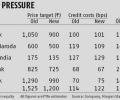
Banking stocks, including top ones like State Bank of India, ICICI Bank, HDFC Bank, Bank of Baroda and Bank of India, among others, have fallen sharply in the last one month.

The market capitalisation of BSE-listed firms jumped to an all-time high of Rs 304.53 lakh crore on Wednesday, buoyed by an unprecedented rally in equities where the BSE benchmark Sensex ended over the 67,000-mark for the first time ever. Rallying for the fifth day running, the 30-share BSE Sensex climbed 302.30 points, or 0.45 per cent, to end at its lifetime closing high of 67,097.44 points. During the day, it jumped 376.24 points, or 0.56 per cent, to reach its all-time intra-day peak of 67,171.38 points.

Identifying cyber crime as a major threat, Sebi Chairman U K Sinha recently said such attacks are occurring these days in a more sophisticated manner.

Benchmark Sensex rose by 443 points to close at a new record high while Nifty settled above the 24,100 mark on Monday on buying in banking and IT shares in line with gains in Asian and European markets. The 30-share BSE Sensex settled higher by 443.46 points or 0.56 per cent at an all-time high of 79,476.19.

At the heart of Paytm's slide lies the abject failure of its Super App strategy, notes Indrajit Gupta.

The stock of the country's largest passenger vehicle maker, Maruti Suzuki India (MSIL), has been hitting successive all-time highs over the past three trading sessions. The rally in the scrip has helped it notch over a 21 per cent gain since the start of February, outperforming the National Stock Exchange Nifty Auto Index. The gains for the leader of small passenger cars have been more recent, as the company still trails the Nifty Auto over one- and two-year periods.

Brokerages are expanding the universe of stocks they cover amid a boom in the market. Several stocks in the mid-cap universe are now tracked by more analysts than they were a year ago. For instance, SBI Cards and Payment Services is now tracked by 17 brokerages, compared to just four a year ago.

US-based Schall Law Firm has said it will file a class action lawsuit against Infosys Ltd to recover losses suffered by investors in the wake of allegations of "unethical practices" at the Indian IT major. In October, Infosys had informed the stock exchanges of having received anonymous whistleblower complaints alleging certain unethical practices by the top management.

From the Sensex pack, NTPC, Tata Motors, Titan, Larsen & Toubro, Reliance Industries, IndusInd Bank, Infosys, HDFC Bank and Power Grid were among the major gainers. Wipro and Tech Mahindra were the laggards.

Scammers sometimes misuse personal information collected during tax preparation, leading to identity theft or unauthorised financial transactions.

Infosys was the top gainer in the Sensex pack, rising over 2 per cent, followed by Bajaj Finance, HCL Tech, Tata Steel, Tech Mahindra and NTPC. On the other hand, Maruti, Sun Pharma, HUL and ITC were among the laggards. Nifty rose 122.15 points to 17,343.55.
